August 24, 2025
Hallucination Risk Is a Known Quantity. Treat It Like One.
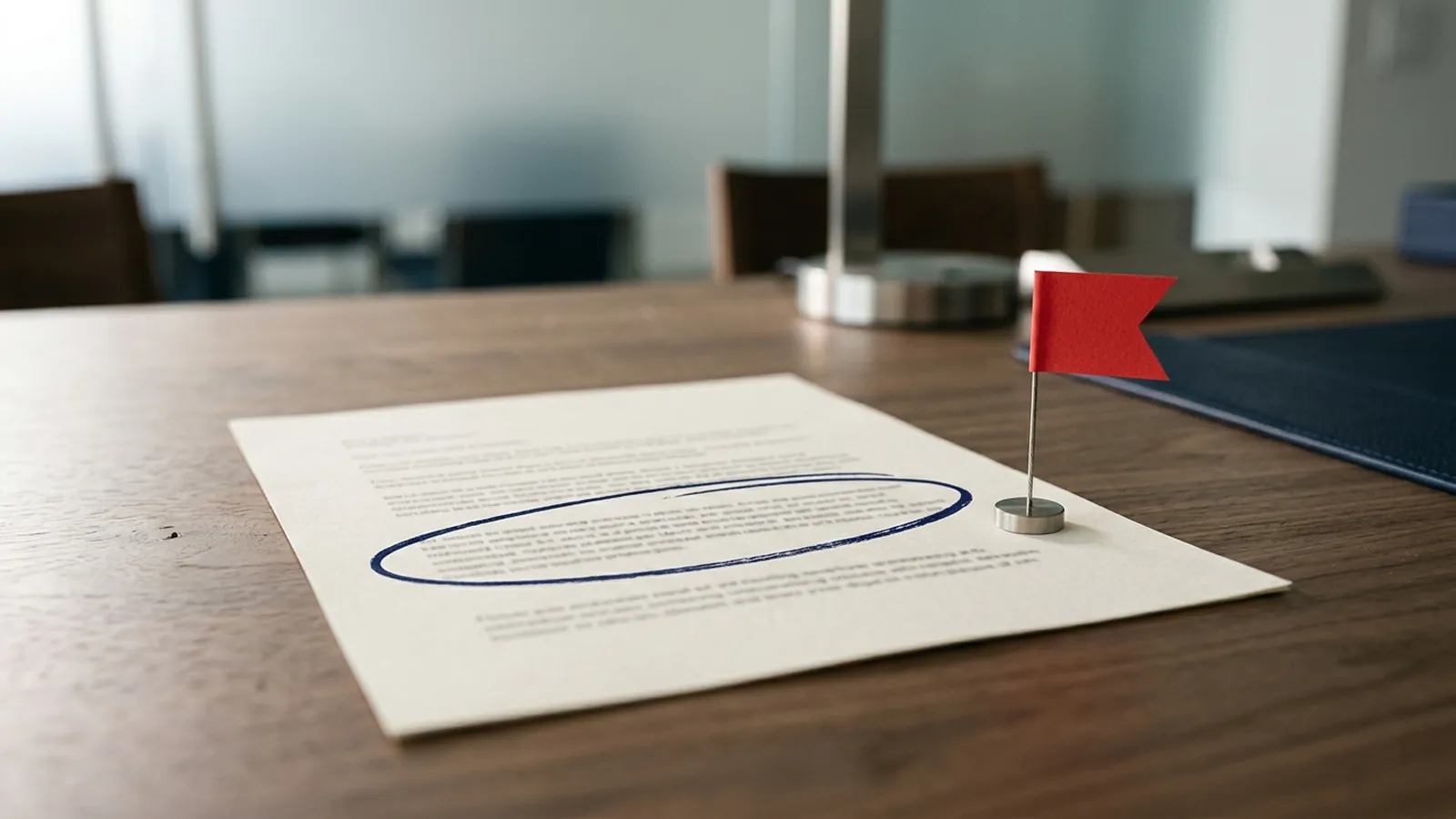
Every serious discussion of AI tools eventually gets to the same known limitation: the tool can state something incorrect while sounding exactly as confident as when it states something correct. Treating this as a planning input, rather than an occasional embarrassment, changes how a team should build its process.
Where the risk concentrates
It is highest on thin, ambiguous, or recent information, a small private company with little public footprint, a very recent event the underlying model has limited data about, or a specific number that requires precise sourcing rather than general description. It is lowest on well-documented, stable, publicly verifiable facts.
Why the confident tone is the actual danger
A person hedging a guess signals uncertainty naturally, I think, probably, a raised eyebrow. A model asked the same question in a mode where it is essentially guessing often states the guess in the same flat, declarative tone it uses for something well-established. The tone gives the reviewer no signal to slow down.
The process response
Treat every factual claim as unverified until traced to a specific source, regardless of how confidently it reads. Build the process so that source-tracing is a required step, not an optional one a busy reviewer skips under deadline pressure. This is less about catching every error, no process catches every error, and more about making the catch rate high enough that the ones that slip through are rare and low-stakes.
A habit that reduces the risk without slowing work down
Whenever a draft states a specific number, date, or fact that will reach a client, pause and ask where does this come from, specifically, before moving on. If the honest answer is a source document, proceed. If the honest answer is the tool said so, that is the exact moment the risk described above is live, and it takes less time to check than to explain later why an incorrect figure reached a client.
Extending the habit to numbers already in a firm's own systems
The same where does this come from, specifically question applies even to figures that originated internally rather than from an AI draft, a number pulled from an old internal memo, for instance, may itself be stale or previously incorrect. The habit of asking the question every time, regardless of the number's apparent origin, is more valuable than assuming AI-produced numbers are the only ones that need checking.
A short note on why this habit is cheap relative to what it prevents
The habit described here costs seconds per claim and prevents the kind of error that costs a client relationship. Framed against that comparison, the habit is not really an added burden on drafting speed, it is closer to a form of insurance that happens to also improve the quality of the finished document.
A short note on the difference between a policy and a habit
A written confidentiality policy and an actual team habit of checking sources and disclosing tool use are related but distinct, and a firm can have a good policy on paper while the daily habit has quietly lapsed. Periodically observing, rather than just asking, whether the described practices are actually happening in a sample of real client work is a more reliable check than trusting that a written policy alone is being followed.
The gap between the two tends to widen quietly during busy stretches, when a policy that everyone agreed to in principle gets treated as optional under deadline pressure. Checking in on the habit specifically during a firm's busiest periods, not just its calmest ones, gives a more honest read on whether it actually holds.
A final word on treating this as an ongoing practice, not a one-time project
Confidentiality practice around AI tools is not something a firm finishes and moves past. New tools get adopted, new client types raise new questions, and staff turnover means the habits described here need periodic reinforcement rather than a single rollout. Treating this as a standing, lightly maintained practice, revisited on a regular calendar, is more realistic than treating it as a project with a defined end date.
Key takeaways
- Hallucination risk is highest on thin or recent information, lowest on well-documented facts.
- A model's confident tone gives no reliable signal about whether it is actually correct.
- Treat all factual claims as unverified until traced to a specific source.
- Build source-tracing as a required step, not one a busy reviewer can skip.
Questions, answered
What is the short answer on Hallucination Risk Is a Known Quantity. Treat It Like One?
A model stating something false with full confidence is a well-documented failure mode, not a rare surprise. Teams should plan around it rather than hope around it.
What are the key takeaways?
Hallucination risk is highest on thin or recent information, lowest on well-documented facts. A model's confident tone gives no reliable signal about whether it is actually correct. Treat all factual claims as unverified until traced to a specific source. Build source-tracing as a required step, not one a busy reviewer can skip.
How does VIPMarketing approach confidentiality?
VIPMarketing runs in a private, hosted workspace. You own every document and record, and none of it trains a model or serves anyone else.